Because the students are on a field trip today, we didn't need to play the Carillon. It gave us a chance to take a walk from the Jerusalem Center to the Old City.
Chris and Dave Heiner were our guides and I was surprised it is only about a 20 minute walk. We walked down to the 1st level and there are steps leading to a street nearby.
The Orson Hyde Park is located also on the Mount of Olives and on our way to the Old City. However, the Orson Hyde memorial plaque had been removed.
After several attempts to replace it and vandals continued to destroy it, it was decided to the leave the area alone.
The gardeners for lower part of the property for the Jerusalem Center were cooking breakfast. We looked into the little structure where they have their meals.
This is an interesting country and you will see the influence of many cultures. The Russian Orthodox Church of St. Mary Magdalene could be seen on our way to the Old City.
At the base of the Mount of Olives we saw the grave yard for the Muslims.
Right near the street were some Arab women taking a selfie so I grabbed my camera.
According to Jewish tradition, the Messiah will descend to Jerusalem from the Mount of Olives and enter the city through the "Gates of Mercy" or the "Golden Gates."
Since He will pass through the cemetery, located so close to the Temple Mount, those buried on the Mount of Olives will be the first to be resurrected.
At the right side of the photo, notice the beautiful hill of green and I was reminded of
the song, "There is a Green Hill Far Away. . ." What a thrill to be in this wonderful city and to experience so many new places and people each and every day.
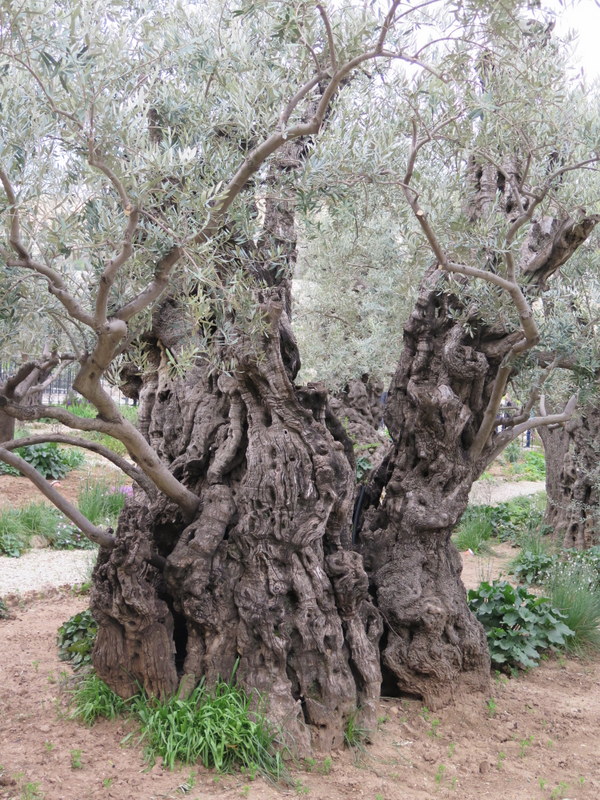
Our first stop was at the Garden of Gethsemane.
This was one place that stood out in my mind from our trip to Jerusalem in 1971. A lot has changed since then and now the garden is enclosed with a fence around it but the very old olive trees still in place. We spent one evening in the Garden with a Catholic priest who related the story of the of the Last Supper and events leading up to the crucifixion of Jesus.
Right near the Garden of Gethsemane is the Church of the 7 Nations. Seven denominations went together and built this church to cover the rock where Jesus atoned.
Mass was being held in the church and people went up and kissed the stone.
After the Last Supper, Jesus went to the Garden to pray. This is supposedly the stone where he atoned for our sins.
We went down to a grotto which is where Jesus met with His disciples and also where Judas betrayed Him.

We visited many other places in the Old City but my camera ran out of battery so I had to say to myself, "Another time . . . we've got 17 more months!" We left through Damascus gate
and bought some strawberries, dried figs and dates, almonds and cashews. Now it is time to prepare for the concert tonight in the auditorium.